The Dutch kilometer charge: What does this mean for your logistics?
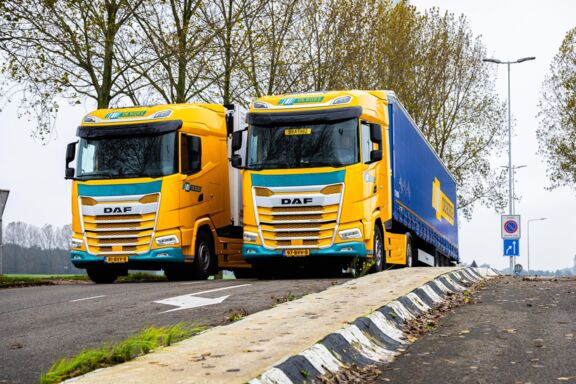
16 June 2026 - From 1 July 2026, the Dutch government will introduce the truck charge (Kilometer charge). This is an important change for the transport sector and has a direct impact on the cost structure of transport. In this article, we explain clearly what this levy entails and what it means for (us as) carrier(s) and for you as a customer.
What does the Kilometer charge entail?
The Kilometer charge means that from now on, trucks will pay per Kilometer driven instead of through fixed taxes such as the Euro vignette.
The main features:
- Applies to trucks heavier than 3,500 kg (category N2 and N3)
- Applicable to almost all motorways and some provincial and municipal roads
- Rate is determined by:
- Vehicle weight
- CO₂ emissions / emission class
- Cleaner and lighter vehicles pay less per kilometer
This will mean that the average rate will be around €0.15 – €0.20 per Kilometer, depending on the type of truck.
From fixed to variable: why this change?
With the introduction of the Kilometer charge, the Netherlands is making the switch from a system with fixed costs to a system in which payment is based on use. The current Euro vignette will be abolished and motor vehicle tax for trucks will also be abolished or reduced, shifting costs to an amount per Kilometer driven.
This change has several purposes. On the one hand, it ensures a fairer system, because both Dutch and foreign trucks pay for the actual use of the Dutch infrastructure. On the other hand, it stimulates the sustainability of transport: vehicles with lower CO₂ emissions pay less per Kilometer, which makes investments in cleaner technology more attractive.
Moreover, with this measure, the government wants to reduce emissions from road transport and at the same time support the sector, by investing a large part of the proceeds back into innovation and sustainable solutions.
How does the Kilometer charge work in practice?
To register the Kilometers driven, an On-Board Unit (OBU) is used in the vehicle. This system automatically records the kilometers driven via GPS and sends the data to the toll service provider, which takes care of billing to the user. The process is completely digital and without toll gates.
What does this mean for you as a customer?
The introduction of the Kilometer charge has an impact on the total transport costs within the supply chain. Because transporters will pay per Kilometer, operational costs will increase immediately.
This can lead to adjustments in transmission tariffs and contract agreements. At the same time, there is more transparency, because costs are more clearly linked to actual kilometers driven.
In addition, the new system encourages more efficient transport. Think of better route planning, bundling of shipments and reducing empty kilometers. Sustainability is also playing an increasingly important role, as cleaner vehicles are financially rewarded.
Curious about the specific change in your transport chain? Please contact your contact person!

Would you like to get in contact with one of our advisors?
Our employees are happy to help!
The latest news
Transport to the United Kingdom: What Makes a True Specialist?
Reliable transport to and from the United Kingdom requires more than capacity alone. Discover why expertise in customs,…
The Dutch Kilometer charge: what does this mean for your logistics?
From 1 July 2026, the Dutch Kilometer charge will be introduced, with a direct impact on transport costs and supply chains.…
De Rijke Group Sustainability Report 2025
The first Sustainability Report by De Rijke Group. Clear ESG goals, concrete actions and a long‑term vision for sustainable…